
Two polished furniture quotes sit on the desk, and one carries the lower subtotal. That does not make it the lower proposal. Until both quotes cover the same products, services, destination, schedule, and commercial responsibilities, approving either one is premature.
The correct decision point is the evaluated landed-and-installed cost. That figure reveals what the luxury living room design will actually cost to purchase, transport, receive, store, install, and support through the required move-in date.
Two luxury living room quotes should be compared by evaluated total, not merchandise subtotal
Compare both proposals on a tax-aware, landed-and-installed basis. Align quantities, specifications, services, delivery location, currency, and validity dates before ranking either supplier.
What total should a luxury living room quote comparison use?
Evaluated total = merchandise + selected options − discounts + applicable tax + freight + receiving + storage + final delivery + installation + fees − credits + priced scope corrections. Show unresolved exposure separately rather than disguising it as a confirmed cost.
- Fix the project basis. Record the delivery address and postcode, tax jurisdiction, building restrictions, target installation date, occupancy deadline, currency, and quote validity.
- Preserve original values. Keep each quoted subtotal, discount, allowance, fee, exclusion, and service charge exactly as issued.
- Classify cost certainty. Mark each amount fixed, estimated, allowance, owner-direct, excluded, or unresolved.
- Normalize the scope. Add documented adjustments for missing quantities, upgraded specifications, freight, installation, tax, or other differences without overwriting the original quote.
- Calculate the evaluated total. Rank proposals only after compliant scope and unresolved exposure are visible.
Which quote differences prevent an immediate price comparison?
A price ranking must stop when quantities, dimensions, materials, configurations, warranties, or delivery responsibilities differ. A sofa with upgraded upholstery, extra cushions, delivery and placement is not equivalent to a frame-only quotation.

Two luxury living room quotes should be compared by evaluated total, not merchandise subtotal shown as an editorial reference for proportion and finish coordination.
Lighting also requires matching performance rather than appearance alone. Where qualified products apply, ENERGY STAR states that qualified LED lighting uses at least 75 percent less energy and lasts up to 25 times longer than incandescent lighting.
Every variance should remain visible until clarified, priced, or rejected. A bid-leveling worksheet provides that audit trail.
A bid-leveling worksheet should put every living room item and service on a common basis
A bid-leveling worksheet should give each product or service one comparable record while preserving the supplier’s original figures. Merchandise, logistics, installation, and unresolved risk should never be blended into an unexplained adjustment.
Which columns belong in a luxury living room bid-leveling sheet?
Product identity
Record category, room tag, manufacturer, model, finish, configuration, dimensions, accessories, and required quantity.
Commercial record
Record quoted unit cost, quoted extension, discount, normalization adjustment, evaluated extension, currency, and quote revision.
Control record
Record lead time, status, source page or attachment, clarification owner, and response deadline. Status options should include compliant, confirmation required, alternate, omitted, and noncompliant.
Never overwrite quoted cost. The normalization adjustment belongs in a separate field. This approach reflects the useful distinction between Products and Execution described by the Interior Designers Institute.
How should bundles, alternates, discounts, and allowances be leveled?
Break package prices into products and services where the vendor permits. Keep complimentary products at zero without deleting their scope. Show conditional discounts, allowances, minimum-order charges, upgrades, and alternates separately, including every deposit or package-purchase condition. The next test is whether the proposed products are genuinely equivalent.
Luxury living room furniture prices are comparable only when the specifications are equivalent
Product prices become comparable only after both proposals describe materially equivalent goods. Manufacturer, model, dimensions, quantity, finish, upholstery, construction, performance requirements, warranty, and accessories must match or remain recorded as variances.
Are the quoted furniture models, dimensions, quantities, and finishes genuinely equivalent?
Check each line against the approved room plan, furniture schedule, manufacturer literature, finish schedule, and product drawing. Record the model or SKU, orientation, sectional configuration, finish code, cushion fill, base finish, accessories, and installation requirements.
The Interior Designers Institute specification guide explains that exact product identification helps prevent cheaper or incompatible substitutions, protects design intent, and supports accurate pricing and scheduling. The guide identifies manufacturer, product line, finish code, dimensions, installation method, and special requirements as specification details, and its cited MasterFormat framework places furnishings in Division 12.
For sofas, verify sofa dimensions against the circulation plan before treating a smaller configuration as equivalent. For casegoods, compare substrate, veneer or solid material, hardware, stone type, finish, and natural-variation notices.
Stone selection also carries maintenance implications. The Natural Stone Institute recommends neutral cleaners, stone soap, or mild liquid dishwashing detergent with warm water. It warns that abrasive powders and creams can scratch natural stone.

Luxury living room furniture prices are comparable only when the specifications are equivalent shown with floor, wall, and fixture relationships visible.
How should upholstery yardage, fabric grades, and customer-supplied material be compared?
Separate the furniture frame from fabric or leather. Record supplier, pattern, color, grade, width, repeat, unit cost, required quantity, reserve, freight, backing, treatment, cutting approval, and excess-material handling. For customer-supplied material, assign responsibility for suitability, defects, and shortages.
If an applied product emits volatile organic compounds indoors, the U.S. Environmental Protection Agency recommends increased ventilation during use.
How should brand, origin, and authenticity claims be documented?
Record the manufacturer, model-specific literature, stated country of origin, authorized seller status, and available serial or authenticity records. Document furniture origin and authenticity rather than accepting descriptive language as provenance. Once the product scope matches, logistics must be leveled separately.
Freight, tax, receiving, storage, delivery, and installation must be leveled separately
The financial comparison must show the full cost of transporting, receiving, storing, delivering, assembling, and installing each item at the named residence. Every responsibility needs a price or an unresolved-status flag.
How should domestic freight and imported-furniture terms be compared?
Domestic freight quotations should state origin, destination, shipment method, packaging basis, accessorial charges, validity period, and final delivery point. Imported-furniture quotations also require currency, customs-broker responsibility, duties or tariffs, import taxes, port charges, insurance, and final-mile responsibility.
Do not interpret an Incoterm from its abbreviation alone. Require the exact term, named place, and edition in the purchase order. Confirm in writing who handles export clearance, main carriage, insurance, customs clearance, terminal charges, and domestic delivery.
Which receiving, storage, and installation services are actually included?
“White-glove delivery” is not a sufficient scope description. Record receiving inspection, photography, visible-damage reporting, concealed-damage procedures, storage commencement, minimum billing, handling, insurance, assembly, placement, protection, debris removal, and return trips.
Building review should confirm loading access, lift reservations, stairs, parking, delivery hours, certificates of insurance, floor and wall protection, assembly space, and packaging removal. Classify each responsibility as included, fixed extra, estimate, allowance, owner-direct, excluded, or unresolved.
Ventilation may also belong in installation planning. The U.S. Environmental Protection Agency identifies furnishings, paints, varnishes, waxes, cleaning products, and building materials as common indoor VOC sources.

Freight, tax, receiving, storage, delivery, and installation must be leveled separately shown with floor, wall, and fixture relationships visible.
Which taxes and project fees belong in the evaluated total?
Confirm tax treatment for the project jurisdiction using current revenue-authority guidance. Require each vendor to separate merchandise, freight, delivery, installation, and other services while identifying the purchaser and delivery destination. Once the landed-and-installed total is visible, the commercial terms determine whether that total is deliverable.
Lead times, payment milestones, warranties, and cancellation terms determine commercial risk
Commercial terms can outweigh a modest price difference when furniture is custom, imported, or tied to a hard move-in date.
Do the quoted furniture lead times support the living room installation date?
Work backward from installation through final delivery, receiving, inspection, repair allowance, transit, production, and approvals. Confirm whether timing begins at deposit, order acknowledgment, drawing approval, finish approval, or receipt of upholstery.
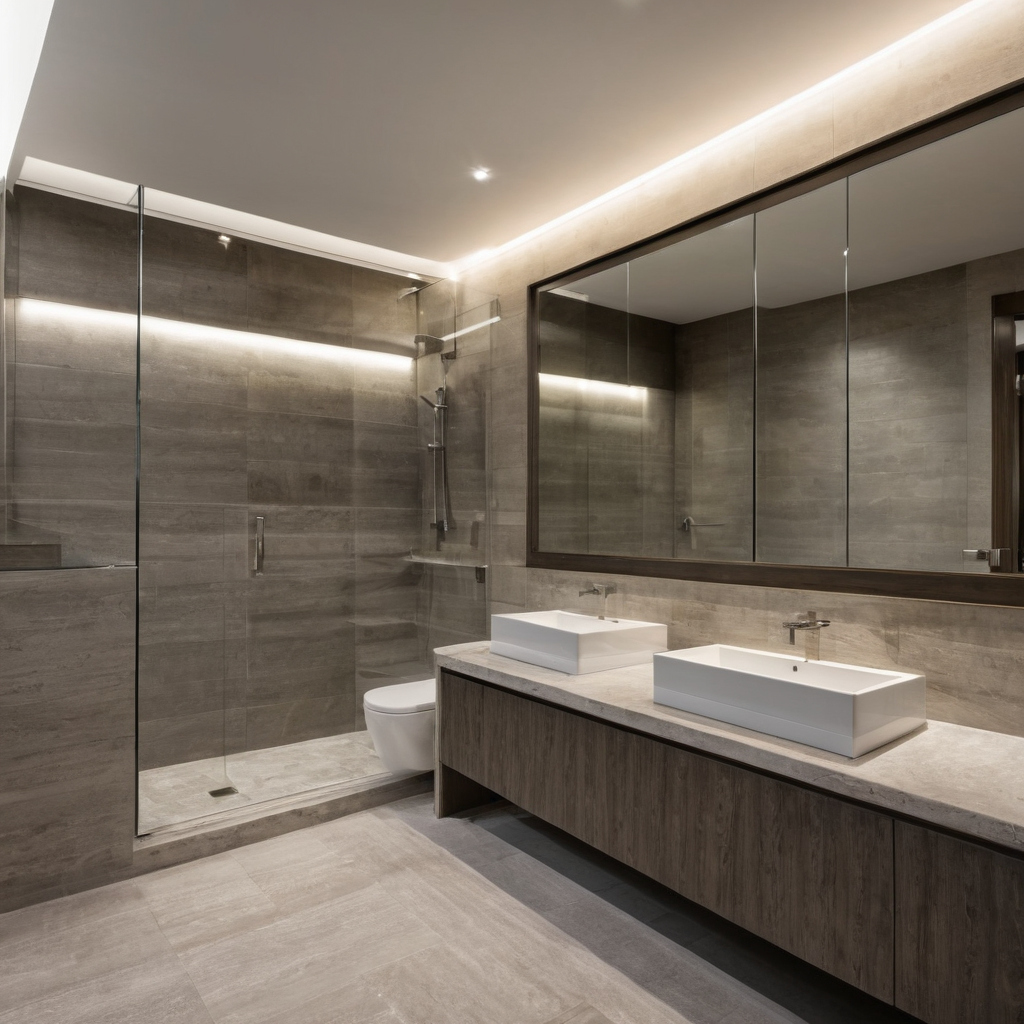
Lead times, payment milestones, warranties, and cancellation terms determine commercial risk shown with floor, wall, and fixture relationships visible.
Are the payment milestones tied to verifiable progress?
Compare deposits, progress payments, pre-shipment balances, financing charges, refundability, and accepted payment methods. Tie payments to records such as an order acknowledgment, shipment document, receiving report, or installation sign-off. Address damaged, disputed, incomplete, and back-ordered items before releasing final payment.
What do the furniture warranties and cancellation terms actually cover?
Separate manufacturer and seller obligations for frames, cushions, mechanisms, finishes, upholstery, labor, and freight. Record exclusions, remedies, claim procedures, change cutoffs, cancellation rights, title transfer, and risk of loss. These terms must feed directly into the final reconciliation.
A worked bid-leveling example should reconcile every adjustment back to the original quotes
A credible comparison should reconcile every adjustment to a redacted quotation, vendor clarification, rate sheet, or documented tax calculation. Unsupported averages do not belong in the award recommendation.
How does a line-by-line comparison change the apparent low quote?
For each vendor, begin with the original quoted amount. Add separate ledger entries for quantity corrections, specification corrections, conditional discounts, payment differences, freight, receiving, storage, installation, tax, and credits. Each entry should identify its source document and produce a confirmed evaluated amount.
How should unresolved furniture costs be shown without guessing?
Keep unresolved exposure outside the confirmed evaluated total. Record the issue, clarification owner, deadline, and available vendor range. If unresolved costs could reverse the ranking, keep the recommendation conditional.
The award should go to the lowest evaluated compliant living room proposal
The winning proposal should be the lowest evaluated offer that satisfies the approved specification, installation date, service requirements, and accepted risk profile. It should not automatically be the cheapest or most expensive quotation.
Which clarifications must be closed before the furniture order is released?
Stop the award if any of the following remains unresolved:
- Quantities, dimensions, configurations, finishes, upholstery, accessories, or selected alternates are missing.
- Allowances have no stated limit or basis.
- Freight, customs, receiving, storage, installation, or tax responsibility is unidentified.
- The installation date lacks written schedule support.
- Payment milestones are not tied to verifiable progress.
- Warranty, cancellation, damage, repair, or return-trip responsibilities remain unclear.
- Unresolved exposure could materially change the evaluated ranking.
For customized or permanently installed pieces, separate expensive-to-reverse choices from trial purchases before accepting substitutions or reduced specifications.
What should the final furniture award record contain?
The award file should contain the final proposal revision, approved furniture schedule, purchase order, payment schedule, delivery address, building requirements, installation scope, baseline programme, accepted exclusions, owner-direct charges, and named vendor, logistics, designer, and owner contacts.
Vendor clarifications belong in revised commercial documents, not only in emails. The purchase order should state how later changes are priced, approved, scheduled, and recorded. Release the order only when another reviewer can trace the decision from each original quote to the compliant scope.
Frequently asked questions
These answers address the final comparison questions that commonly remain before a luxury living room furniture award.
What makes a furniture quote suitable for a genuinely luxurious living room rather than merely expensive?
A suitable quote identifies the exact products, finishes, construction, services, schedule, warranty, and commercial responsibilities. Price alone does not establish quality, suitability, or procurement control.
How should quotes be compared when one proposal uses two sofas and the other uses a sectional?
Compare the approved functional requirement first. Confirm seating capacity, dimensions, orientation, circulation, upholstery allocation, accessories, and installation access. Treat the alternatives as different configurations rather than forcing an artificial unit-price comparison.
Should freight, receiving, storage, and installation be included in the furniture budget?
Yes. Include confirmed charges in the evaluated total and disclose unresolved charges separately. A merchandise-only budget does not represent the cost of an installed room.
Does the higher-priced proposal necessarily offer better quality or lower procurement risk?
No. Quality and risk must be demonstrated through specifications, provenance, service scope, lead-time support, warranties, and contractual terms. A higher subtotal may still omit important responsibilities.
How much unresolved cost is acceptable before a custom furniture order should be placed?
Unresolved cost is acceptable only when it cannot materially change the supplier ranking or exceed the approved budget authority. If it could alter either decision, close the clarification before releasing the order.